



How to Correct Roll Forming Machine Processing Deviations and Ensure Consistent Profile Precision
2026-09-10
In high-volume production of building profiles, roof panels, and cladding sheets, the precision of your roll forming machine directly determines your yield rate and your reputation on the job site. Even a well-built line will eventually show signs of deviation: dimensional drift, side bend, twist, length inconsistency, or surface unevenness. If these issues are ignored, material waste piles up, installation crews struggle to fit panels, and project schedules slip.
The good news is that most processing deviations are not random. They follow patterns, and those patterns can be traced to four root causes. Once you know where to look, you can correct the problem at its source rather than relying on manual rework.
The Four Root Causes of Roll Forming Deviation
Processing errors in roll forming typically fall into one of four categories:
Mechanical structure deviations — frame distortion, roller wear, guide misalignment, loose transmission components.
Process parameter deviations — incorrect roller pressure, uneven forming pass distribution, mismatched line speed.
Electrical control deviations — servo parameter drift, encoder measurement errors, signal response delays.
Material adaptation deviations — inconsistent strip thickness, hardness variation, unstable coil tension.
Each category requires a different correction approach. Accurate diagnosis is the first step toward a permanent fix.
Correcting Mechanical Structure Deviations
The machine frame is the foundation of precision. If the frame is not properly machined or has deformed over time, the roller mounting surfaces lose their parallelism, and every forming station sits at a slightly different height. This directly causes side bend and twist in the finished profile.
The correction is systematic:
Periodically inspect and recalibrate the frame reference surfaces using precision measurement instruments.
Check the levelness and parallelism of every forming station to ensure a common baseline.
Inspect rollers for wear, grooves, and surface damage. Rollers that are out of round or no longer concentric must be reground or replaced.
Verify that all drive components — chains, gears, bearings, bolts — are properly tightened and lubricated.
The guide and feeding mechanism deserves special attention. Misaligned guide plates, worn guide rollers, or uneven support rollers will cause the strip to drift left or right, producing width variations that cannot be corrected downstream. Adjust guide plate clearance to match the strip width precisely — tight enough to prevent wandering, loose enough to avoid scratching the coating. Replace any roller that drags or wobbles. On lines equipped with automatic edge correction, calibrate the sensors regularly so the system can do its job.
Correcting Process Parameter Deviations
Many factories push line speed up to increase output, or adjust roller pressure without a clear standard. The result is incomplete forming, uneven stress distribution, and defects like buckling, wrinkling, or edge wave.
The correct approach follows a simple principle: progressive forming, step by step.
Distribute the total deformation evenly across all forming stations. No single pass should attempt to bend the strip too aggressively.
For thicker or harder material, reduce line speed to give the strip more time to form gradually.
For thin decorative panels, you can run faster — but only after confirming that dimensional accuracy is maintained.
Whenever you change to a new profile, run a test piece. Measure wave height, wave pitch, and effective width. Adjust roller settings based on actual measurements before committing to full production.
Correcting Electrical Control Deviations
Length inaccuracy and cutting defects are often electrical in nature. Servo drives, encoders, and PLC systems handle feed measurement and cut control. Over time, parameters can drift, encoders can slip, and signal response can lag.
Correction steps include:
Clean and recalibrate encoders. Remove dust and debris, and tighten mounting screws to prevent measurement slip.
Reset servo system baseline parameters to unify feed speed and cut response.
Lock critical electrical parameters so they cannot be changed by unauthorized personnel.
For cutting angle or burr issues, adjust flying saw blade clearance and replace dull blades to restore synchronization.
Correcting Material Adaptation Deviations
Different batches of pre-painted steel, galvanized sheet, or aluminum-magnesium-manganese coil can vary slightly in thickness, hardness, and ductility. Running all of them with the same fixed parameters will eventually produce deviation.
Before production, check incoming material properties. For harder strip, reduce the pressure per forming station and add buffer passes. For thinner strip, adjust guide tension to prevent stretching. Maintain stable decoiler tension so the coil feeds smoothly — never too loose, never too tight.
Build a Routine Precision Maintenance System
Correcting deviations after they appear is necessary, but preventing them is better. Establish a routine maintenance schedule:
Daily: Check chain tension, bearing condition, and bolt tightness. Lubricate moving parts.
Weekly: Calibrate guide mechanisms, roller baselines, and cutting system accuracy.
Monthly: Perform a full machine accuracy inspection. Replace worn or aging components before they cause defects.
Operator training is equally important. Standardized setup, changeover, and production procedures reduce human error — one of the most common causes of batch deviations.
How Intelligent Roll Forming Machines Are Changing the Game
Modern roll forming lines are moving toward higher precision, greater intelligence, and lower error rates. Newer machines offer:
Intelligent parameter memory — stores the optimal settings for each profile and recalls them with one touch.
Automatic edge correction — continuously monitors strip position and adjusts in real time.
Real-time deviation detection — identifies small errors during production and corrects them before defective parts accumulate.
These features shift deviation control from “fix it after it happens” to “prevent it before it starts.”
A Complete Precision Control System
Processing deviation in roll forming is never caused by a single factor. It is the result of mechanical, process, electrical, and material variables interacting. The most effective solution is a complete precision control system: accurate diagnosis, targeted correction, routine maintenance, and intelligent monitoring.
At Cangzhou Guangchi Machinery, we build roll forming lines with this philosophy. Our machines are designed with rigid frames, precision-ground rollers, stable servo control, and optional intelligent monitoring. We work with customers to configure the right roller materials, forming passes, and control parameters for their specific profiles and production environment.
If you are struggling with dimensional deviation, surface defects, or length inconsistency on your current line — or if you are planning a new production line and want to get precision right from the start — send us your profile drawings and production requirements. We will help you build a line that holds tolerance, shift after shift.
Cangzhou Guangchi Machinery — precision you can measure, reliability you can build on.

Key words:
RELATED INFORMATION
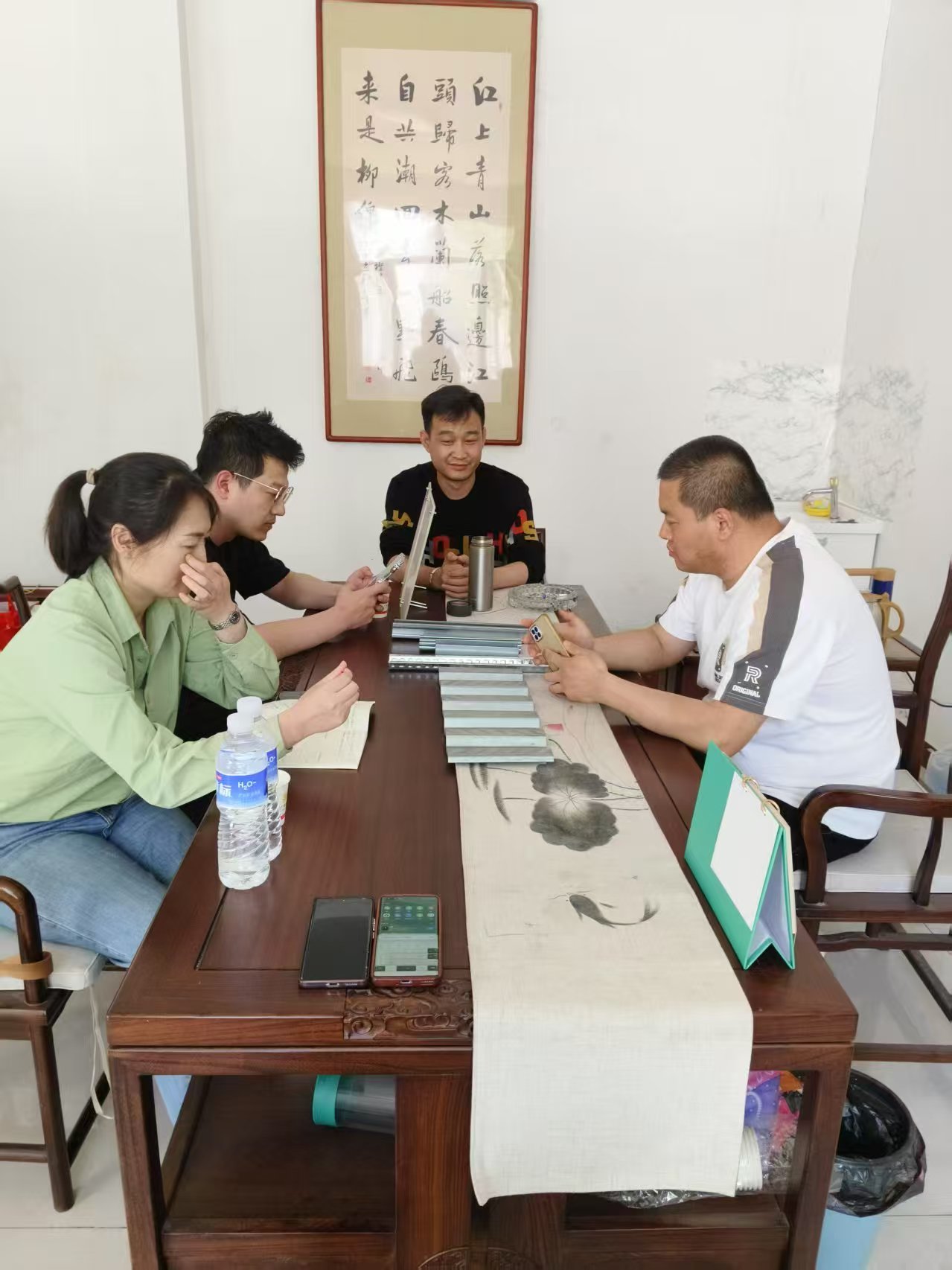
Recently, foreign trade personnel have conducted on-site learning on the company's equipment updates
2025-05-15
2025-04-24
2024-05-22


To inquire about our products, please leave your email to us and we will contact you within 24 hours.
Copyright:©Cangzhou Guangchi Machinery co., Ltd | Poweredby:300.cn | Privacy Policy