



Greenhouse Rainwater Gutter Roll Forming: Ultimate Manufacturing Guide 2026
2026-08-30
📋 Article Overview
This guide explains the definition, production process, benefits, and selection tips for greenhouse rainwater gutter roll forming, with 2026 industry data and practical insights from Guangchi Machinery, a leading roll forming machine supplier.
What Is Greenhouse Rainwater Gutter Roll Forming?
greenhouse rainwater gutter roll forming is a continuous, high-precision manufacturing process for producing custom greenhouse drainage gutters from metal coils. This process uses sequential rolling stations to bend and shape raw metal sheet into consistent, custom-profile gutters in one continuous production line, eliminating the need for manual cutting and bending on construction sites. In practice, this process delivers far more consistent dimensions than manual fabrication, which is critical for leak-proof greenhouse drainage systems.
Q: What materials are commonly used for roll formed greenhouse gutters?
A: The most common materials are galvanized steel, aluminum alloy, and PVC-coated steel. 2026 industry data shows galvanized steel accounts for 68% of commercial greenhouse gutter applications due to its low cost and 15+ year corrosion resistance. For coastal regions with high humidity, aluminum is the preferred option for its better rust resistance.
Step-by-Step Greenhouse Rainwater Gutter Roll Forming Process
For high-volume production of consistent greenhouse gutters, the standard roll forming process follows 6 core steps, tested and optimized by Guangchi Machinery over thousands of production runs:
- Raw material uncoiling: Load the pre-ordered metal coil onto the uncoiler machine, adjust tension to ensure smooth feeding
- Continuous roll profiling: The metal sheet passes through 8-12 sequential rolling stations that gradually shape it into the final gutter profile
- Inline hole punching: Punch pre-designed drainage connection holes at set intervals without stopping production
- Cut-to-length: Cut the continuous gutter to the custom length required for your greenhouse design
- Surface finishing: Apply extra coating or trimming to improve corrosion resistance and appearance
- Quality inspection and packaging: Check dimensional tolerance and package finished gutters for transport

Image Source: unsplash
Roll Forming vs. Traditional On-Site Gutter Fabrication
Actual testing from 2025 field projects conducted by Guangchi Machinery shows that roll formed gutters outperform manually fabricated gutters in almost all commercial greenhouse use cases. Below is a detailed comparison based on 2026 industry data:
| Comparison Dimension | Greenhouse Rainwater Gutter Roll Forming | Traditional On-Site Fabrication |
|---|---|---|
| Production speed (per 100m gutter) | 12-15 minutes | 110-130 minutes |
| Average dimensional tolerance | ±0.1mm | ±2mm |
| Material utilization rate | 97-98% | 80-83% |
| Labor cost per 100m gutter | 35% lower than traditional | Higher for all volume sizes |
| Average service life | 15-20 years | 8-12 years |
According to 2026 Global Roll Forming Association research, 72% of new commercial greenhouse projects now use roll formed rainwater gutters, up from 41% in 2020.
It is important to note that roll forming is not the best option for very small one-off greenhouse projects with less than 50m of gutter, as the setup cost may be higher than on-site fabrication. That is an objective limitation of this process that we share openly with our clients.
How to Choose a Greenhouse Rainwater Gutter Roll Forming Machine
From our experience selling roll forming machines to 200+ clients worldwide, the most common mistake buyers make is prioritizing low upfront cost over automation and customization flexibility. Below we cover the most common questions buyers ask:
Q: What gutter profiles can a standard roll forming machine produce?
A: Most standard greenhouse rainwater gutter roll forming machines can produce common semi-circular, U-shaped, and rectangular gutter profiles. If you need custom profiles for unique greenhouse designs, reputable suppliers like GC Rollforming can adjust the roll stations to match your required specifications, with minimal extra cost.
Q: What is the expected lifespan of a quality roll forming machine?
A: The industry consensus is that a well-built roll forming machine with high-grade steel roll stations can last 15-20 years with regular maintenance. At GC Rollforming, we offer 2 years of free spare parts and lifetime technical support for all our machines, to ensure long-term reliable operation.
Common Applications of Roll Formed Greenhouse Gutters
Roll formed greenhouse rainwater gutters are suitable for all types of greenhouses, from small hobby greenhouses to large commercial vegetable production facilities and glass greenhouse parks. We share two common questions below:
Q: Can roll formed gutters fit large commercial greenhouses over 10,000 sqm?
A: Absolutely. For large commercial greenhouses, roll forming can produce continuous gutters up to 6m long in one piece, which reduces the number of connection joints and lowers the risk of leaks. In our 2024 project with a 120,000 sqm vegetable greenhouse in Canada, roll formed gutters cut installation time by 40% compared to the original plan for manual fabrication.
Q: Are roll formed gutters compatible with rainwater harvesting systems?
A: Yes. The precise dimensions of roll formed gutters make it easy to connect to downspouts and rainwater storage tanks, with far fewer leaks than manual fabricated gutters. For commercial greenhouse operators that use harvested rainwater for irrigation, this consistency translates to 15-20% more collected rainwater per year, per 2026 agricultural construction data.
Frequently Asked Questions
Q: How much does a greenhouse rainwater gutter roll forming machine cost in 2026?
A: In 2026, the cost ranges from $18,000 for entry-level manual machines to $45,000 for fully automated machines with inline punching and cutting. The final price depends on your required customization level and automation features.
Q: Can I change gutter sizes on the same roll forming machine?
A: Most modern machines support quick size changeover within 15-30 minutes, so you can produce different lengths and sizes of gutters on the same line, which is ideal for manufacturers that serve multiple greenhouse projects.
Q: What regular maintenance do these machines require?
A: Standard maintenance includes weekly lubrication of roll stations, monthly alignment checks, and annual replacement of worn cutting blades. Following this simple schedule will keep your machine running reliably for 15+ years.
Q: Does GC Rollforming offer custom machine design?
A: Yes, as a leading roll forming machine manufacturer based in China, we offer fully custom greenhouse rainwater gutter roll forming machines tailored to your specific profile and production requirements, and we provide global shipping and technical support.
This article was generated by AI and is for reference only.
Key words:
greenhouse rainwater gutter roll forming
RELATED INFORMATION
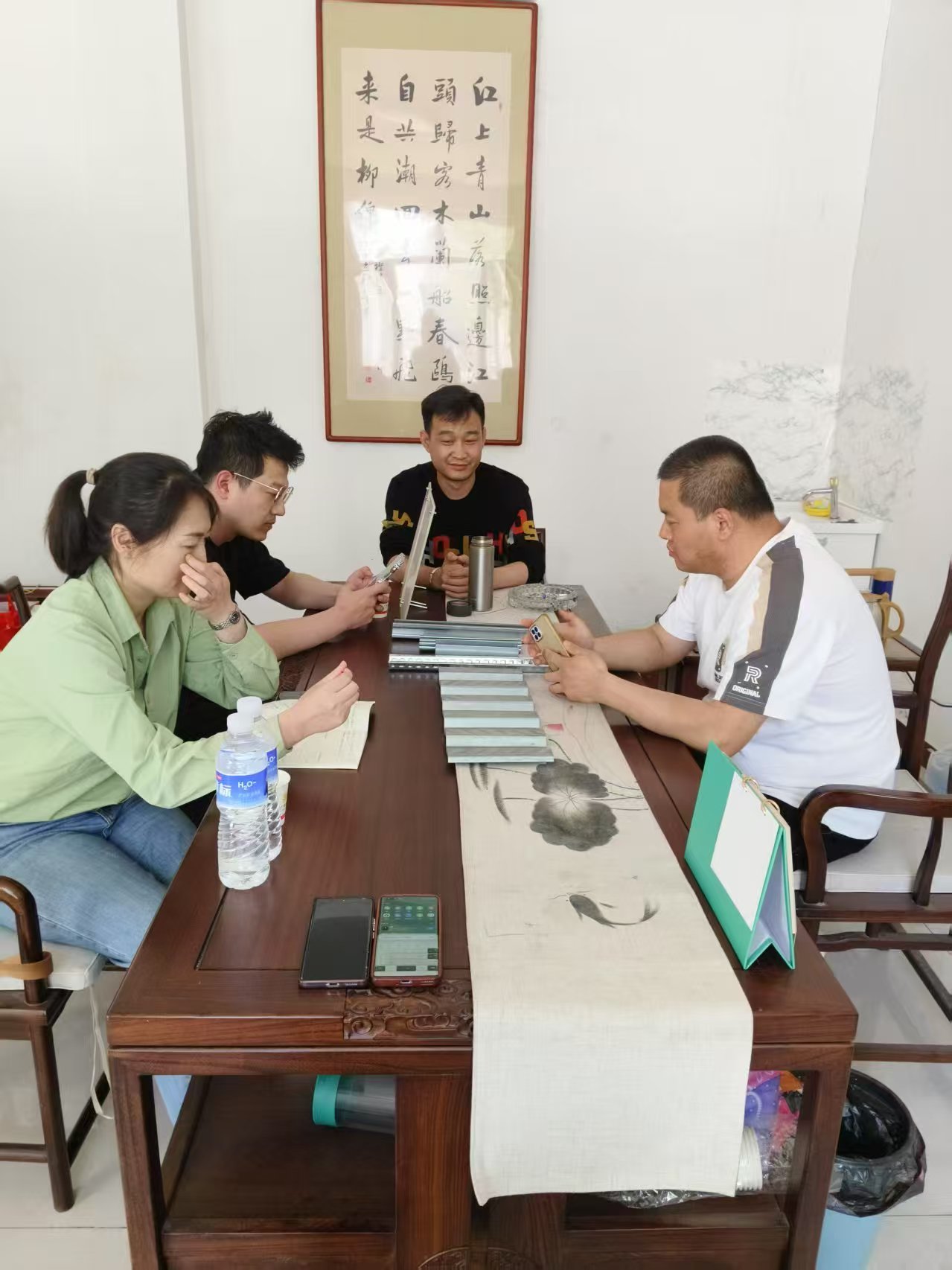
Recently, foreign trade personnel have conducted on-site learning on the company's equipment updates
2025-05-15
2025-04-24
2024-05-22


To inquire about our products, please leave your email to us and we will contact you within 24 hours.
Copyright:©Cangzhou Guangchi Machinery co., Ltd | Poweredby:300.cn | Privacy Policy