



Light Steel Keel Roll Forming Machine: High-Precision Stud, Track, and Furring Channel Production for the Global Framing Market
2026-07-17
Behind every smooth office wall, every fire-rated partition, and every suspended ceiling grid lies a hidden structural skeleton — light steel keels. These cold-formed C‑shaped and U‑shaped profiles are the backbone of modern non‑load‑bearing construction. Yet for manufacturers supplying this booming market, inconsistent profile geometry, slow size changeovers, and manual punching operations are daily struggles that directly eat into margins.
Cangzhou Guangchi Machinery’s light steel keel roll forming machine is engineered to turn those struggles into a smooth, single‑line operation. From decoiling to finished, punched, and cut‑to‑length profiles, the line produces studs (C‑shape), tracks (U‑shape), and furring channels with the precision and speed that large‑scale drywall contractors demand.
One Line, an Entire Framing System
Traditional keel production often requires multiple separate machines — one for studs, one for tracks, sometimes a third for furring channels. Our integrated approach allows a single roll forming line to produce all three profile types from galvanized steel coil, simply by swapping quick‑change roller sets and adjusting the PLC presets. This means you can:
*Fulfill mixed orders from one machine
*Switch between stud and track production in minutes
*Keep your factory footprint compact while maximizing output
Whether your customers are commercial builders, residential developers, hospital and school contractors, or modular construction firms, you supply the complete framing package from one production cell.
Precision That Passes Site Inspection
On-site assembly of drywall partitions and ceilings leaves no room for dimensional errors. A stud that is 1 mm too wide, a track with uneven flanges, or a furring channel with misaligned shoulders will be rejected on the spot. That’s why our light steel keel roll forming lines are built around a rigid center‑plate frame structure. The roller shafts are supported on both sides, eliminating deflection and ensuring consistent web height, flange width, and lip dimensions from the first meter to the last.
Rollers are machined from Cr12 hardened steel, precision‑ground and heat‑treated for long‑run wear resistance. Whether you’re processing standard 0.6 mm drywall studs or heavier 1.2 mm profiles for high‑wall applications, the tooling maintains its geometry through millions of linear meters.
Automatic Punching — No Secondary Drilling
Studs and tracks require service holes for electrical and plumbing runs. Our lines integrate in‑line hydraulic punching units that are fully synchronized with the roll forming speed. Multiple holes are punched in a single stroke — no separate drilling station, no misaligned hole patterns, no extra labor. The PLC stores multiple hole‑pattern programs, so switching from one specification to another is a matter of seconds on the touchscreen.
Hydraulic Cutting for Clean, Burr‑Free Ends
A dedicated hydraulic pump station drives the cutting shear. Unlike mechanical clutch systems that wear under high‑cycle conditions, oil‑hydraulic shearing delivers consistent cut quality — no burrs, no twisted ends, no secondary finishing. The cut length is set digitally and maintained to ±1 mm accuracy, even at full production speed.
Fully Automatic, Two‑Person Operation
The entire line — decoiling, feeding, leveling, roll forming, punching, cutting, and run‑out — runs under PLC control. One operator manages the touchscreen panel and monitors the process; a second handles coil loading and finished‑product stacking. That’s it. No skilled metal‑forming technicians required. For factories in regions where experienced labor is scarce or expensive, this is a direct bottom‑line advantage.
Custom‑Built Around Your Market’s Standards
There is no “universal” light steel keel. North American markets use specific flange widths and lip dimensions. European projects follow EN standards with different hole patterns and edge treatments. Middle Eastern and Asian markets have their own preferred sizes.
We build every machine starting from your profile drawings. You specify:
*Web height and flange width ranges
*Material thickness (typically 0.4 mm to 1.5 mm)
*Hole diameter, pitch, and edge distance
*Stud, track, or furring channel profiles — or all three
*Voltage and frequency to match your local power supply
Our design team then engineers the roll tooling, punching dies, and line configuration specifically for your product catalog. The result is a machine that slots directly into your existing workflow without compromise.
CE Certified and Globally Deployed
All our light steel keel roll forming machines carry CE certification covering electrical safety, mechanical guarding, and overall design. They are ready to pass customs and workplace inspections in the European Union and other CE‑recognizing markets. With nearly 20 years of manufacturing experience and exports to over 150 countries — including France, Saudi Arabia, the United Arab Emirates, and Türkiye — we have the documentation, voltage adaptation, and logistics experience to deliver a turnkey line wherever you are.
Send Your Drawings, Start Your Production
Every light steel keel roll forming machine we ship begins with a conversation about your market. Tell us the stud, track, and furring channel dimensions you need to produce, the annual tonnage you’re targeting, and your local power specifications. We’ll engineer a complete line that turns galvanized coil into ready‑to‑ship framing components — accurate, efficient, and reliable.
Request your custom light steel keel line configuration today.
Key words:
RELATED INFORMATION
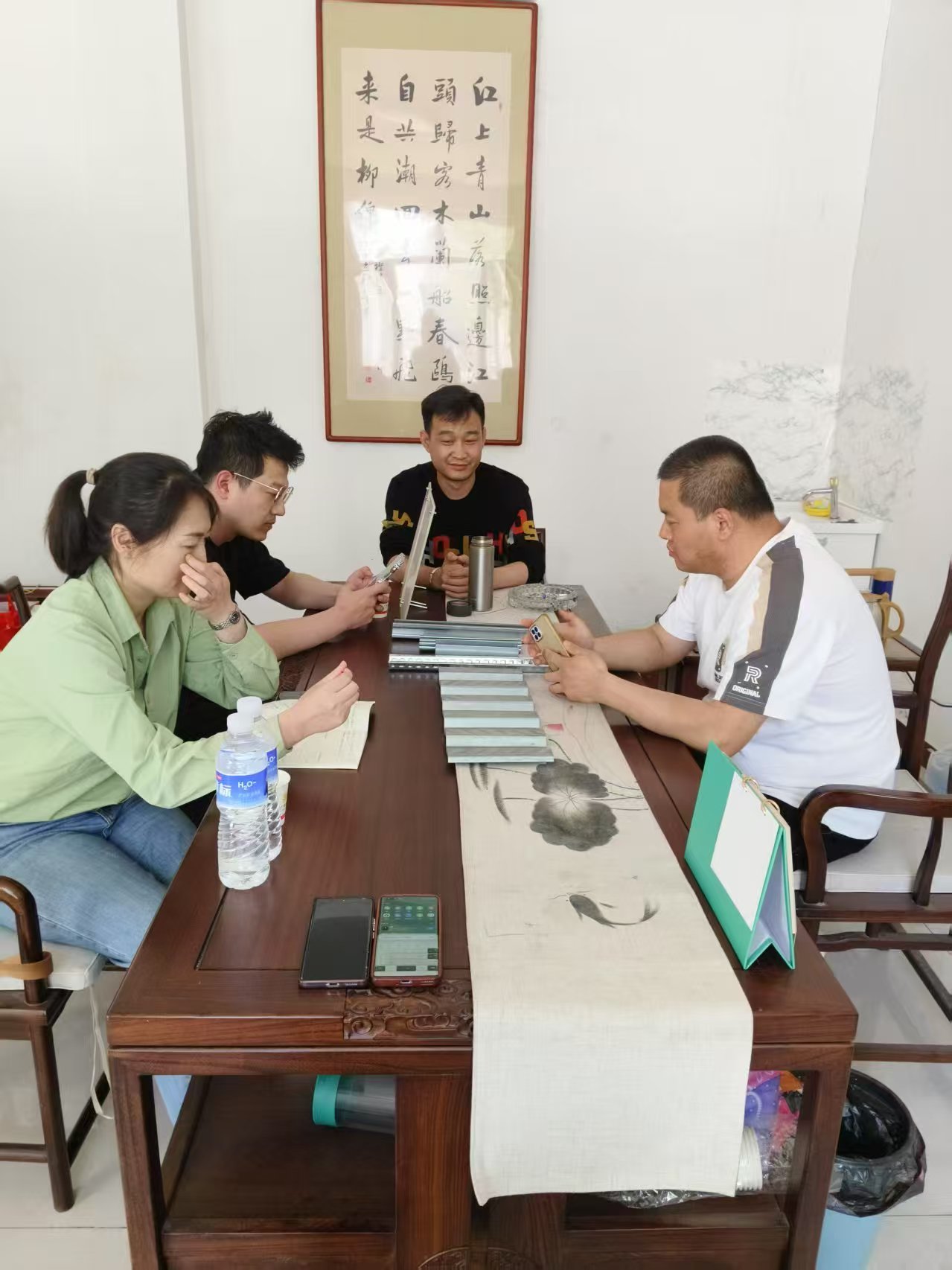
Recently, foreign trade personnel have conducted on-site learning on the company's equipment updates
2025-05-15
2025-04-24
2024-05-22


To inquire about our products, please leave your email to us and we will contact you within 24 hours.
Copyright:©Cangzhou Guangchi Machinery co., Ltd | Poweredby:300.cn | Privacy Policy